Currently Empty: $0.00

Executive Summary: In the intricate world of Program/Project Management, an acute understanding of the broader organizational strategy is not just beneficial—it is essential. This article emphasizes the compelling link between strategic alignment and successful project outcomes. For Program/Project Managers to excel, awareness and understanding of the overarching vision is critical for organizational success.
Disclaimer: This article posits that some PMs (Program/Project Managers) might lack a deep grasp of overarching management strategies. Though this portrayal might seem hyperbolic, it underscores a prevalent issue in numerous organizations.
Imagine a meeting room with a Program/Project Manager (PM) expressing (at least in his mind) disdain towards the upper echelons of management. The PM is baffled: “Why halt a promising project midway and transition to another abruptly?” To this manager, the senior leadership appears inconsistent and fickle, continually shifting objectives without clear reasoning.
Conversely, a senior management executive in the same room perceives the PM’s objection as naive. From a strategic standpoint, the change is logical. They think, “Doesn’t the PM grasp the broader market dynamics and the ever-evolving competitive landscape?”
But what is the reality? Who is right, and who is not?
Who is right and wrong?
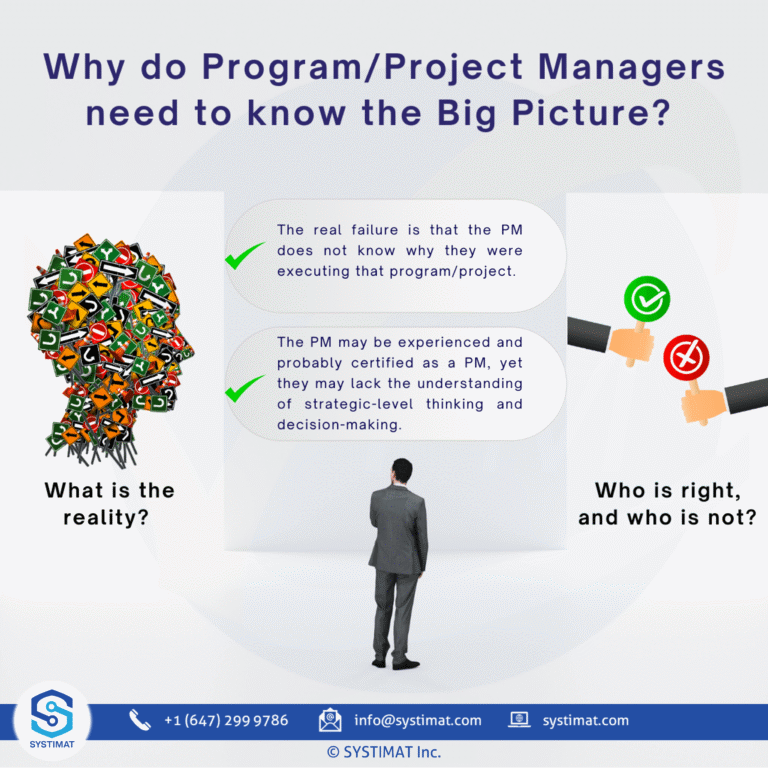
While there may be exceptions where such black-and-white assertion could be true, in most cases, neither is right. The real failure is that the PM does not know why they were executing that program/project. It is a classic example of a lack of situational (i.e., Strategic) awareness where the PM seems to have a tunnel vision focusing only on an assigned program/project.
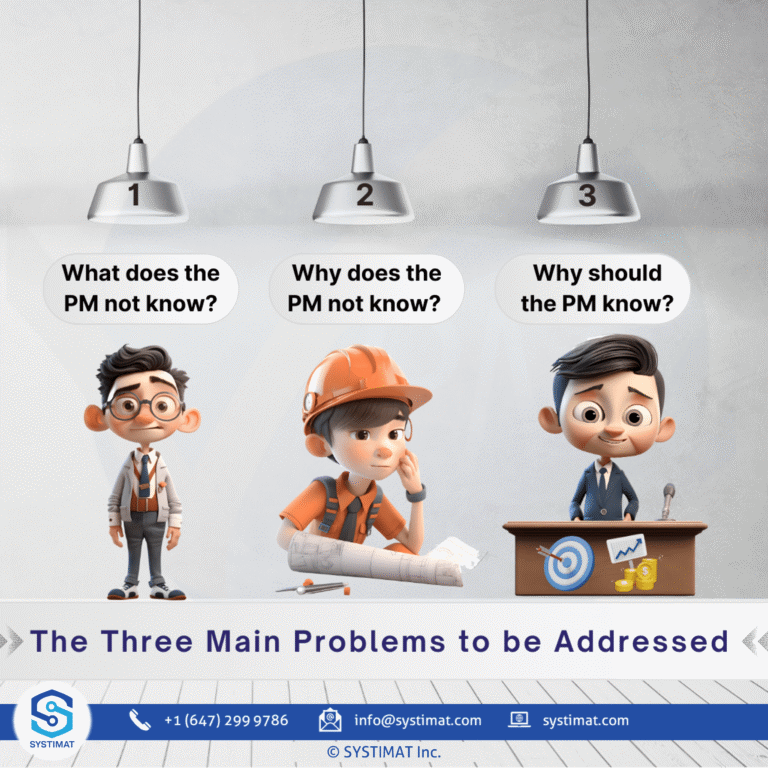
So that seems to be the problem; let us break it down into its constituent components and try to figure the way out:
1. What does the PM not know?
2. Why does the PM not know?
3. Why should the PM know?
1. What does the PM not know?
The PM seems to miss the ground realities beyond the scope and boundaries of their program/project. For the PM, their sole responsibility is to keep the triple constraint under control, which is to deliver the assigned scope on time within the approved budget at an acceptable quality level. The concepts of benefits and value delivery may be alien to a PM. For them, the strategic direction, Vision, mission, values, and objectives appear to be fancy words that the senior management uses to impress them and get away with any illogical decision they make.
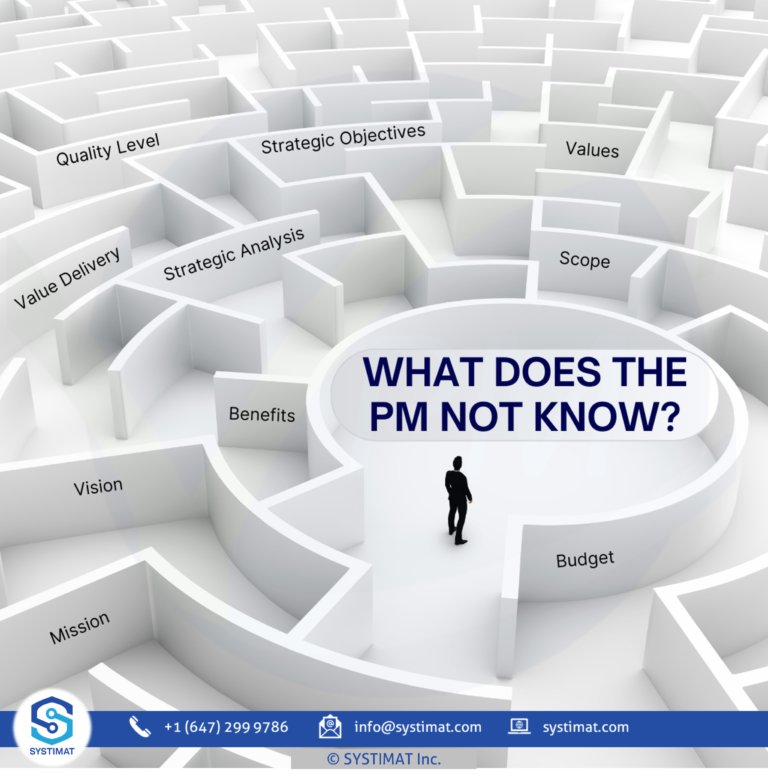
Now we know that the PM lacks awareness of the Strategy the organization seems to have developed and is executing to stay relevant and win in the market.
Let us first look briefly into what Strategy is.
According to Lafley and Martin, in their Book “Playing to Win,” Strategy is “… an integrated set of choices that uniquely positions the firm in its industry, so as to create sustainable advantage and superior value relative to the competition.”
Simply put, an organization needs to know its current situation (through Strategic Analysis) and define its future state (the Vision) of staying relevant in the market by competing, and possibly winning, against the competitors through the achievement of its short/long-term goals (the Strategic Objectives) for fulfilling its reason of existence (the mission).
Without going into the nitty gritty of Strategy Management, which we can discuss in another article, let us understand the basics through a simple Strategic Portfolio Management pyramid by PMI, USA.
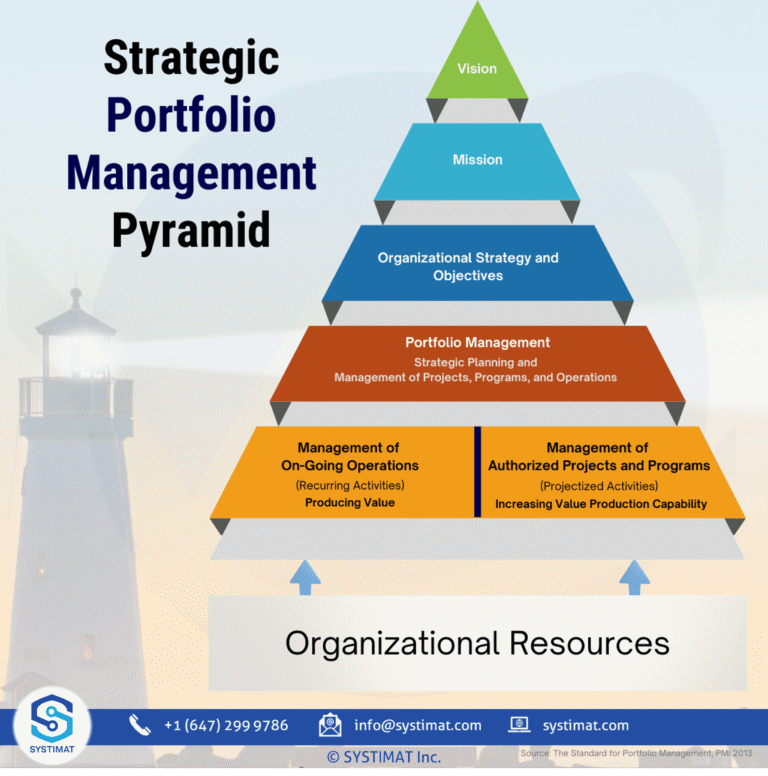
We can further group the sections of the pyramid into four distinct yet connected areas, as shown below:
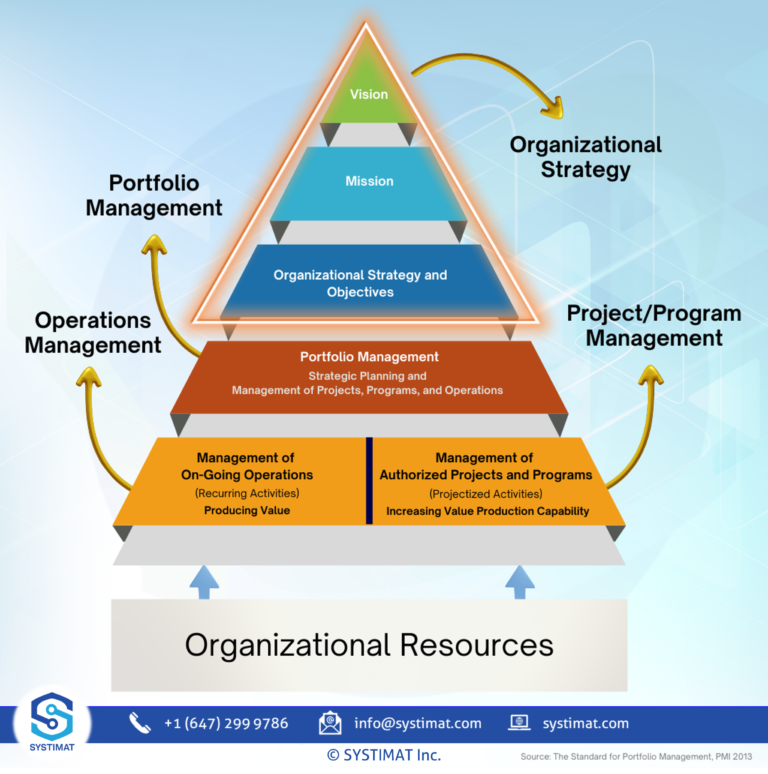
1.1. Organizational Strategy
Organizational Strategy envisions the “future” state and the direction of the organization:
- Executives develop Organizational Strategy, mostly focused on this level.
- Strategy is further translated into actionable Strategic Objectives, which must be achieved to ensure the achievement of the Strategy.
- Executives are responsible for Strategy execution and implementation across the company by cascading it to lower levels through effective communication and training.
Situational Check: Most organizations formally or informally develop short and long-term strategies to compete in the market. In our case, this area seems to be covered well, as the senior management has a developed strategy for competing in the market.
1.2. Portfolio Management
Strategy execution planning/authorization through Portfolio Management:
- Strategy execution is planned, authorized, and controlled through management of the Portfolio of “RIGHT” Program/Projects and Operations.
- Components not aligned with Strategy are deprioritized and/or terminated, irrespective of their current state.
- It bridges the gap between Strategy development at the top level and its execution at a lower level but is often the most ignored area leading to failures.
Situational Check: Developing a Strategy is much simpler than strategy execution. Executives may develop fancy and promising strategies while sitting in their meeting rooms. However, the harsh realities of the world can easily devour the cute-looking Strategy when put into practice. In our case, this area seems to be covered well as the senior management has a developed strategy that they are using to authorize or terminate projects within the organization, i.e., Portfolio Management. However, the Portfolio Management Process seems informal and applied without much analysis and discussion with stakeholders. There is also an apparent lack of awareness among the middle/lower management for the decisions taken at the portfolio level, creating undue strain, confusion, and conflict within the organization. We will elaborate more on this as this is the focus of our current article.
1.3. Program/Project Management
Strategy execution through Program/Project Management for increasing Value Production Capacity/Capability:
- The “RIGHT” Program/Projects, selected and authorized at the Portfolio level, are implemented by specially selected and designated Program/Project Managers.
- A right Organizational Project Management (OPM) Infrastructure is needed to ensure the “RIGHT” implementation of “RIGHT” Programs/Projects.
Situational Check: Most organizations possess OPM, whether defined formally or informally. However, the maturity of the OPM infrastructure is low in most organizations, but the management seems content with such a situation – either by design or by ignorance. This aspect becomes a prime reason for failure in the execution of the developed Strategy as the output of Programs/Projects is below expectations, which fails to deliver the “RIGHT” outcomes at the “RIGHT” time and “RIGHT” cost.
1.4. Operations Management
Continuous value delivery through Operations Management:
- Operations are the recurring activities that utilize the existing and/or new capabilities/capacities generated through Programs/Projects to produce value for the organization.
- Operations need to be fully integrated and synchronized with the Corporate Strategy.
Situational Check: Operations are often the most stable part of any organization, as repeating the same activities is much easier than in the uncertain world of Program/Project Management. However, the Operational Managers are often kept out of strategy development and execution; therefore, they do not realize/understand the importance and urgency of under-implementation initiatives (Programs/Projects). Consequently, they are not forthcoming in sharing the limited resources with Programs/Projects, adversely affecting the strategy execution.
2. Why does the PM not know?
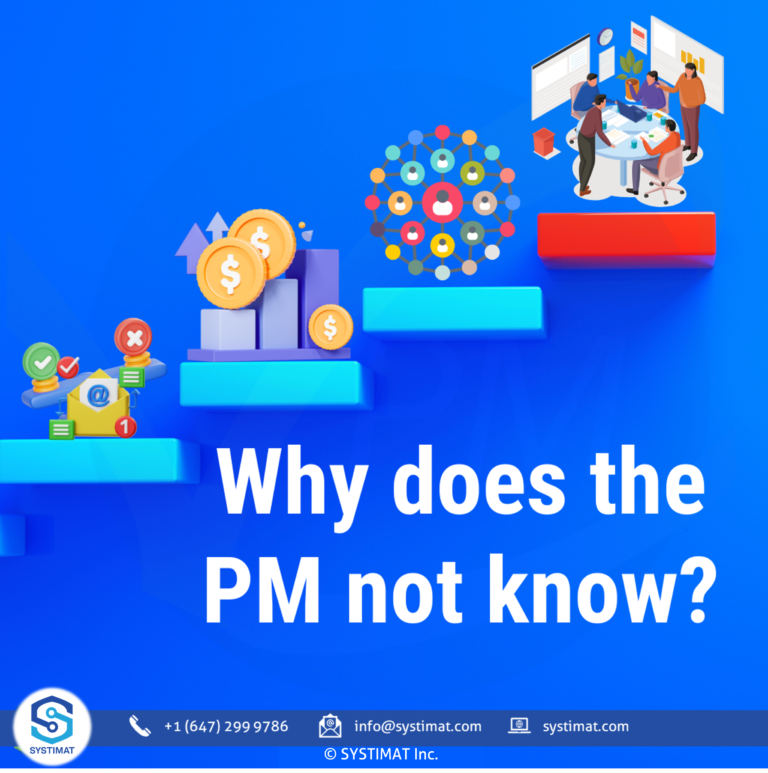
In our situation, the answer is remarkably simple – the PM was probably not involved at all during or after strategy development by executives. Often, the Strategy is developed by executives behind closed doors (probably at expensive resorts in a semi-vacation mode 😊) without involving extended stakeholders and then dished out to the whole organization for implementation without realizing that there is no magic wand that will set everything right at the word “GO.”
So, people, including the PM, will not know if you do not tell them – it is as simple as that.
However, executives try (read “pretend”) to get over this problem by sending high-level details of the developed Strategy through Emails, Newsletters, and possibly a hastily arranged town hall meeting where all the information is just dumped over everyone in a rush without detailed explanation and/or effort.
Remember – Telling does not equate with understanding! All stakeholders must be thoroughly briefed and trained to understand the details and rationale behind the newly developed Strategy.
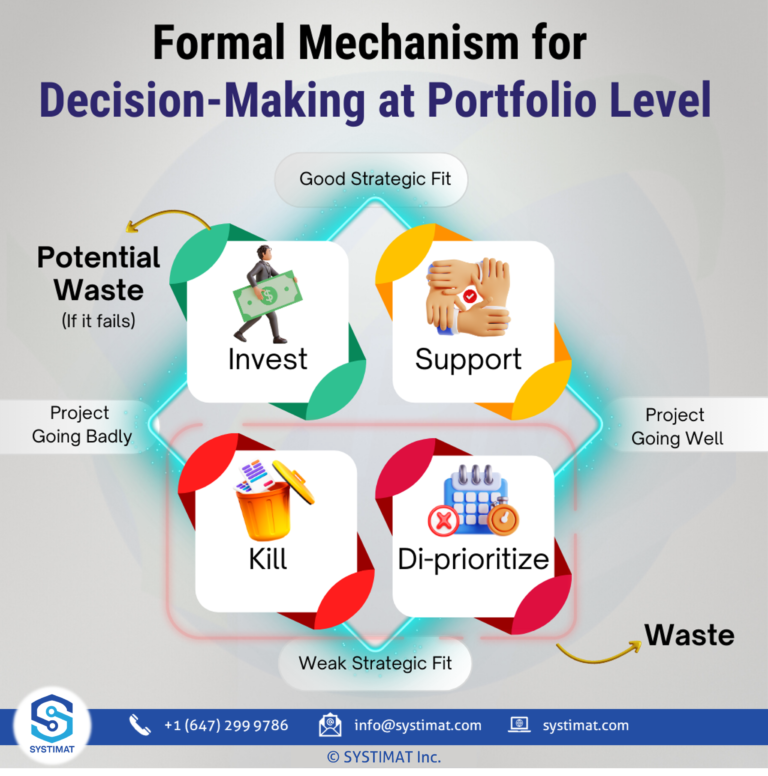
Another problem in Portfolio Management is often the lack of formal and agreed methods of analyzing and approving/rejecting new or existing Programs/Projects. The decisions are often made more subjectively instead of having a comprehensive mechanism to make the portfolio decisions objectively and analytically (Can you recall any Pet Project(s) your CEO or Business Unit head loved to continue?) 😏. Such a situation is bound to create more confusion, disagreement, and, potentially, more conflict within the organization, which will inevitably affect the execution of the Strategy.
Every organization must develop a formal mechanism for decision-making at the portfolio level with the consent of all stakeholders to avoid disagreements and disheartened stakeholders later. In our case, the PM should have been formally trained in such mechanisms to understand the rationale behind the decision to stop their Project in the middle.
3. Why should the PM know?
After this long preamble, let us come to the main point of this article – Why should the PM know the big picture?
We all agree that the primary focus of a PM should be to manage the scope, schedule, and resources of a project or benefit delivery of a program; however, they need to understand and align with the organizational Strategy for the following reasons:
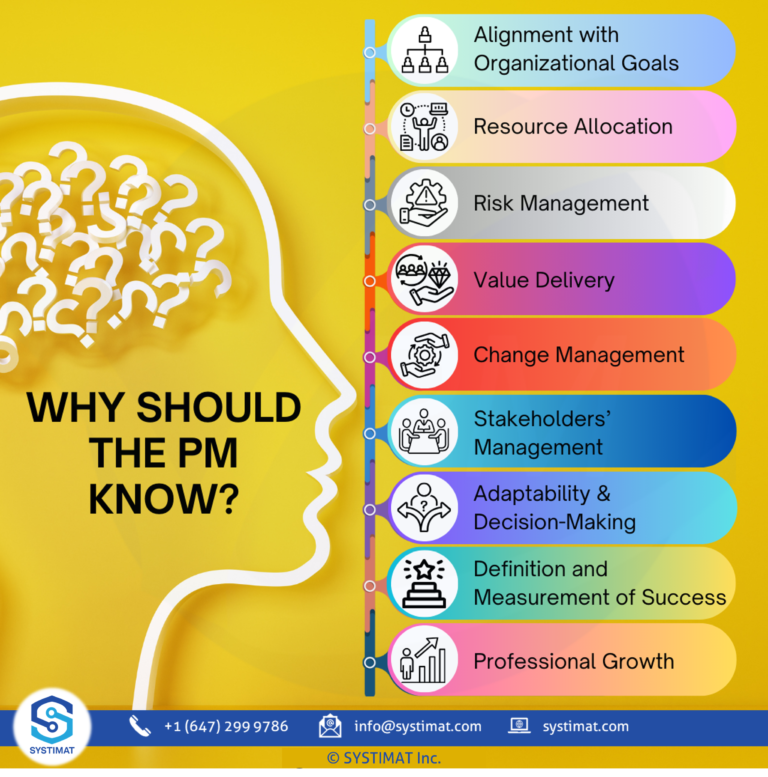
• Alignment with Organizational Goals: Organizational Strategy provides the direction for the organization, and every effort must be made to reach the destination in that direction. Any program/project, no matter how well defined and executed, is a waste if not aligned with the strategic intent and direction. Therefore, the PM must know and fully understand the rationale behind the program/project they are undertaking.
• Resource Allocation: Resources are always scarce and must be shared among different programs/projects and operations. A knowledgeable PM would always understand, appreciate, and even cooperate in the optimum allocation of resources based on strategic alignment and priority.
• Risk Management: Holistic assessment of risks and opportunities is an integral part of business strategy, and the strategically aware PM can leverage the existing knowledge to identify better and manage risks specific to their program/project. The PMs can always consider potential changes/fluctuations in the market, technology landscape, and/or regulatory environment to safeguard their program/project from negative effects and, possibly, convert the threats into opportunities.
• Value Delivery: What is the goal of running this program/project? Or, in other words, what is the ultimate value delivered by this program/project to the organization? Is it undertaken to increase revenue, improve customer satisfaction, save costs, improve processes or infrastructure, etc.? The PM may not deliver those end goals directly through the under-execution program/project. However, their knowledge will help them to always take appropriate action(s) with the bigger picture in mind.
• Change Management: Change is the only CONSTANT! No matter what the PM is doing, it always changes something – a process, a system, or an infrastructure. Knowledge of the big picture makes it much easier for the PM to manage the change systematically, reducing the chances of failure to a minimum.
• Stakeholders’ Management: Knowing all the stakeholders, even beyond the limited scope of the program/project, helps the PM manage key stakeholders much more effectively and smoothly. This understanding achieved through strategic awareness enhances communication and collaboration and helps the PM to create/maintain mutually beneficial relationships.
• Adaptability & Decision-Making: One can only adapt to changes in the broader context if one knows it. The PM who is aware of the big picture is better equipped to plan and adapt to ever-changing scenarios in the market and make the right decisions at the right time. This aspect helps the PM avoid uncertainty and disruptions to their project plans and deliverables.
• Definition and Measurement of Success: How would the PM know if they achieved the desired outcomes from the program/project if they are unaware of the intended outcomes? Knowledge of strategic level considerations helps the PMs set the appropriate success measures and manage their success along the way.
• Professional Growth:Getting involved in strategic-level discussions and workshops broadens the PMs’ skill set and helps them become strategic and critical thinkers – an essential ingredient for leadership positions.
We can safely conclude that the PMs must be aware of the big picture – the organizational Strategy, as it provides them with context, direction, and purpose for their programs/projects. The resulting alignment of programs/projects with organizational Strategy enhances the success of their endeavors. It helps them secure wider support regarding required resources and acceptance for contributing to the organization’s overall success.
Ending Note from Author:
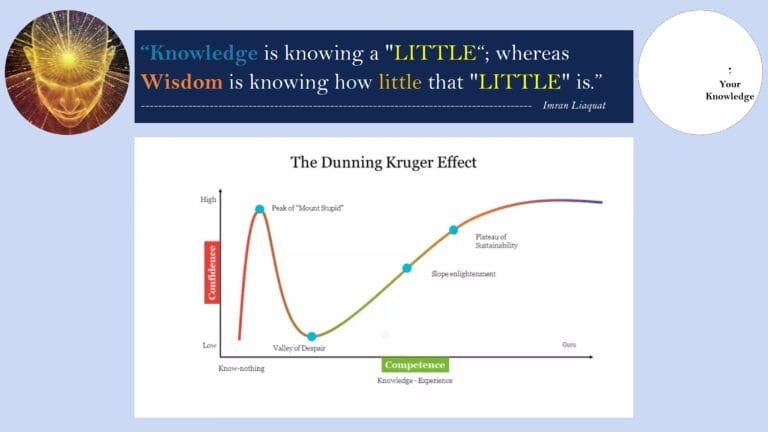
“KNOWLEDGE is knowing a “LITTLE,” whereas WISDOM is knowing how “little” that “LITTLE” is.” – Imran Liaquat