Currently Empty: $0.00
Note: TPM may refer to Technical Program Manager or Technical Project Manager. Although the two roles are different in many aspects, those share lot of traits as well. So, for the sake of brevity, we will assume TPM referring to both: Technical Program Manager and/or Technical Project Manager.
“The courage to imagine the otherwise is our greatest resource, adding color and suspense to all our life.” – Daniel J. Boorstin
Pursuing a career as a TPM is an aspiration for numerous professionals, especially for those who are already members of technical Programs/Projects as they have an intuitive and natural desire to climb up the ladder. Though, a lot can be and has been written about Why and How to become a TPM, we will focus more on the resources a TPM requires to be effective and deliver results. However, to understand the requirements, we need to understand the role first.
What is a TPM role?
A TPM role is subvariant of a regular PM (Program/Project Manager) but with heavy focus on technological aspects. Serving as leaders, TPMs oversee the technological initiatives within an organization, right from their inception to successful execution. Their role involves not just initiating programs, but also offering ongoing support to the teams responsible for bringing them to realization.
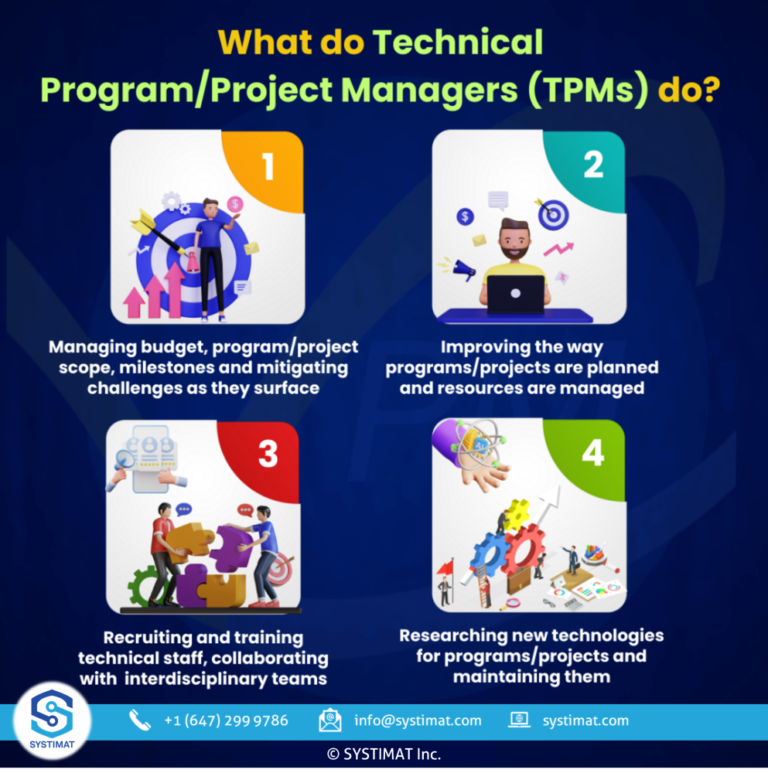
The core responsibilities of TPMs include:
- Definition and management of Scope, Budget, Benefits and Risk
- Optimization of Resources
- Team Development and Stakeholder Management
- Continuous improvement of Program Management efforts
Usually, TPMs collaborate with interdisciplinary teams consisting of engineers, designers, and various other technical experts. They oversee the tasks undertaken by these team members and harmonize their contributions to make certain the program/project progresses as planned. In addition, TPMs maintain close relationships with key stakeholders, such as product managers, organizational leaders, and clients, to guarantee that the project aligns with their requirements and anticipations.
To excel in their role, TPMs need a robust grasp of the program/project’s technical dimensions and must possess the ability to articulate these aspects clearly to both technical and non-technical parties involved. Mastery in project management techniques is also essential, which includes skills in creating and sustaining program/project schedules, monitoring milestones, and troubleshooting and mitigating challenges as they surface. In nutshell, TPMs function as champions for their team, ensuring that they are armed with the right team structure, resources, and information essential for peak performance.
What is required to succeed as a TPM?
Assuming, one has already been appointed as a TPM, knowing what is required and how to acquire those resources is critical to succeed. Before diving in details of resources required by a TPM, let us review what is required in the overall realm. A TPM usually needs a mix of soft and hard skills in addition to the resources:
Soft Skills
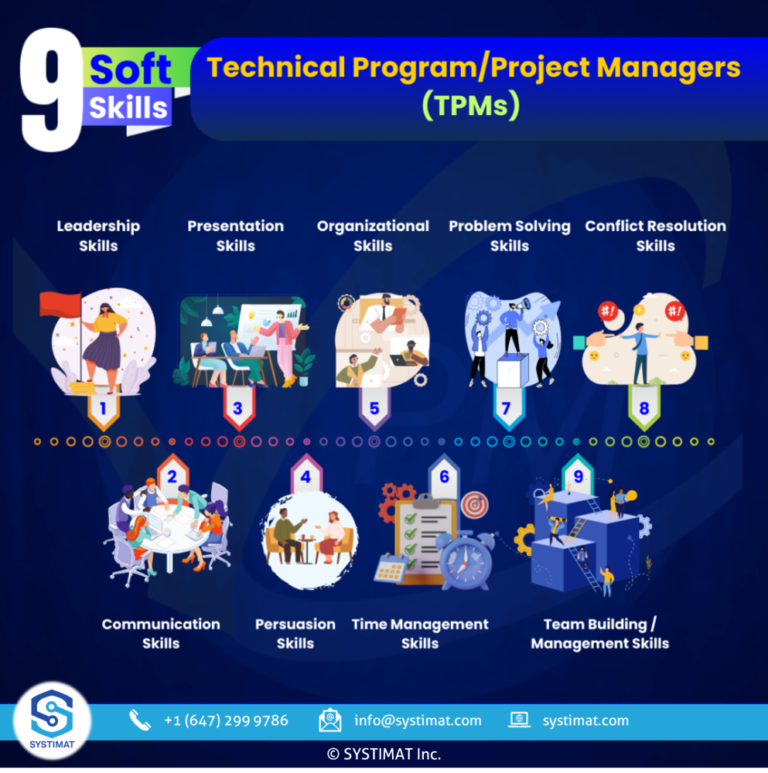
Since, a TPM is leadership role, a right mix of multiple soft skills is the key ingredient as having only hard skills and resources cannot get a TPM across the finishing line. Among many soft skills required, few are listed below:
- Leadership Skills
- Communication, Presentation, Persuasion Skills
- Organizational Skills
- Time Management Skills
- Problem Solving Skills
- Team Building/Management Skills
- Conflict Resolution Skills
Hard Skills
Not having hard skills is certain failure sentence for any TPM as the team would not respect or follow a leader who does not know his job; therefore, a TPM needs at least the following hard skills.
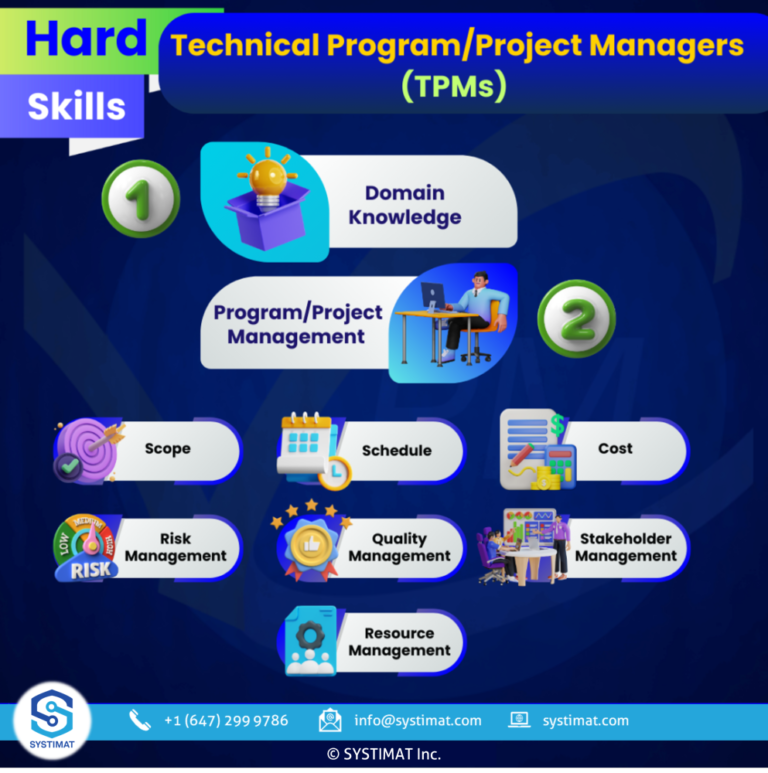
- Domain Knowledge/Skills
- Program/Project Management Scope, Schedule, Cost, Risk, Quality, Stakeholder, Resource Management etc.
Resources
In the field of program/project management, especially for those entering as a Technical Project or Program Manager (TPM), it’s crucial to manage the limited resources well to succeed within the constraints.
What is the definition of Resource?
A resource is defined as:
“An asset that is essential for the successful execution of a specific task or program/project.”
This can encompass individuals, groups, tools, financial assets, and even time. To successfully complete a technical program/project, a variety of resources are often needed. Prior to launching a technical program/project, it’s crucial to evaluate and allocate the resources appropriately. Inadequate planning in this area can lead to exhausting resources before program/project completion or cause delays in meeting the deadlines.
Resources have three shared features:
- Utilization: Resources are utilized to produce something to meet the demand.
- Scarcity: Resources are always scarce, especially within the context of Program/Project Management.
- Depletion: Resources gradually deplete when consumed/used.
What are the types of Resources?
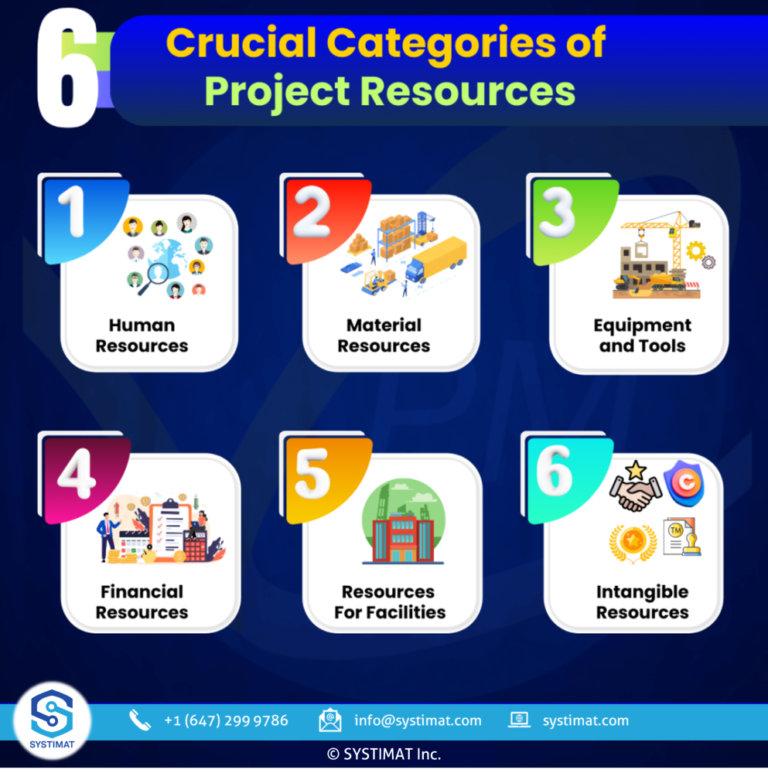
Resource management in projects varies based on the type of resource involved. Here are six crucial categories of project resources:
Human Resources: The people working on your program/project are the most valuable resource. They bring the knowledge and skills necessary to meet the program/project goals. This category includes everyone from program/project managers to individual contributors, as well as external experts like freelancers or consultants hired for specialized roles.
Financial Resources: Every program/project has financial constraints. Your primary financial resource is the allocated budget, but sometimes additional funding sources, like contingency reserves, may be available. Mismanagement of finances can put the program/project at risk.
Material Resources: These are the tangible materials that your program/project will consume. In a construction program/project, this might involve cement, lumber, and nails, while a digital agency could require paper, ink, and personal protective gear like face masks.
Facilities: The facilities where the program/project takes place are crucial. This can range from owned or leased buildings to the utilities supporting them — like electricity, internet connectivity, and internal communication networks.
Equipment and Tools: This category covers the tools that make the work possible. Physical devices like computers and machinery fall under this, as well as digital tools like software licenses or specialized applications.
Intangible Resources: These are the non-material resources a program/project relies on. Brand reputation, intellectual property, and even the collective knowledge of the team falls under this category. Although they’re not limited like physical resources, ensuring their availability and proper use is critical.
Understanding these resource types enables more effective planning and allocation, leading to more successful program/project outcomes.
How to Manage Resources?
Resource Management itself a big field within Program/Project Management and beyond, so a comprehensive summary of resource management practices is listed below:
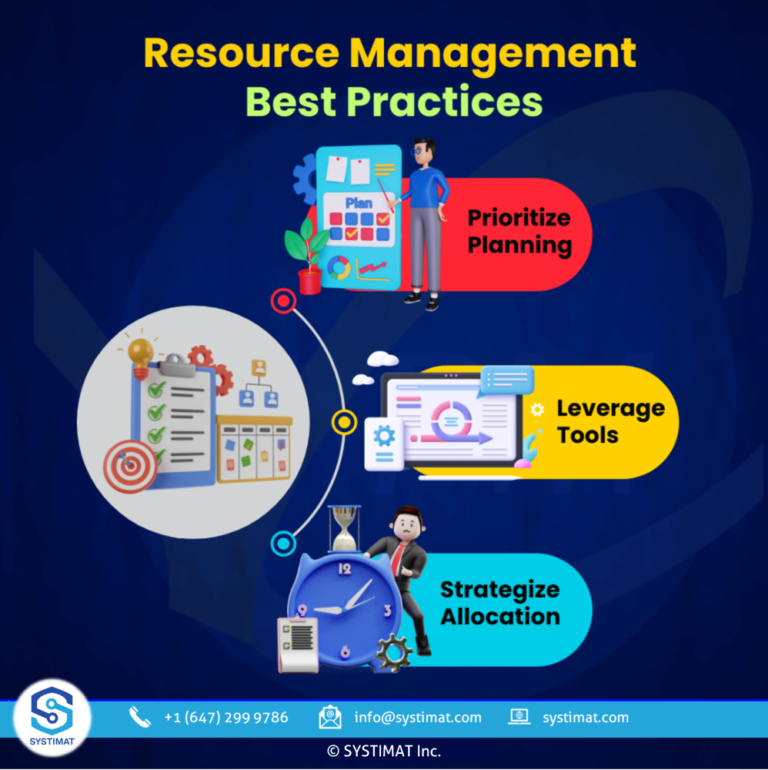
Prioritize Planning
The golden rule is to elevate resource management planning as a top-tier priority. At the scope of the program/project, this entails allocating resources throughout the program/project’s lifecycle to minimize inefficiencies and wastes. Waste avoidance is a big subject in the Lean Management which focuses on reducing waste as much as possible.
Detailed planning aids in resource scheduling, offering guidance to sponsors, stakeholders, and teams, as well as project managers about the program/project’s progression. However, resource planning shouldn’t only commence when a new program/project is initiated. As the Project Management Institute (PMI) advocates, resource planning should be “proactive” rather than reactive. Adopting a foresight-driven approach allows a TPM to also uncover opportunities and risks associated with resource management.
Strategize Allocation
The more strategic your approach to resource allocation, the more effective it becomes. It’s beneficial to audit the resource allocation mechanism, ensuring that personnel with high-demand expertise are deployed to tasks that optimally leverage their skill sets. Moreover, non-human resources should be acquired in big procurement drives to leverage the benefits of bulk procurement. While portfolio level procurement is beyond the scope of a TPM, working closely with Portfolio Managers can help a TPM lower its resource costs as well.
Leverage Appropriate Tools
While manually managing a few resources is doable, leveraging resource planning software streamlines the operation, making it quicker and more proficient. A Resource Management tool not only offers actionable insights for resource planning and management, but it also anticipates adjustments that may become necessary, such as addressing skill shortages, unexpected costs, or potential bottlenecks. It empowers you to gauge the demand vs. availability of each resource, thereby enriching the entire program/project delivery.
Final Thoughts
Resources are the key ingredient of any program/project and a TPM cannot deliver results without effective resource management. Every facet of program/project management revolves around effective resource utilization, ranging from budgetary controls to galvanizing your team through exemplary leadership. Therefore, a TPM must not be aware of types of resources but should also be apt at managing those resources in the most effective manner.
Ending Note from Author:
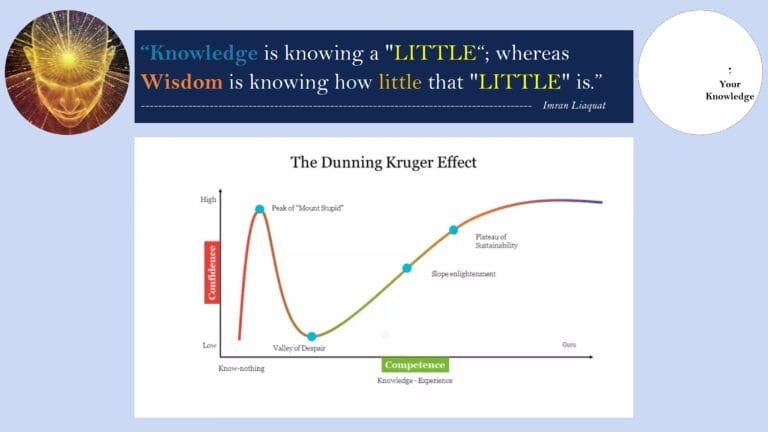
“KNOWLEDGE is knowing a “LITTLE,” whereas WISDOM is knowing how “little” that “LITTLE” is.” – Imran Liaquat